
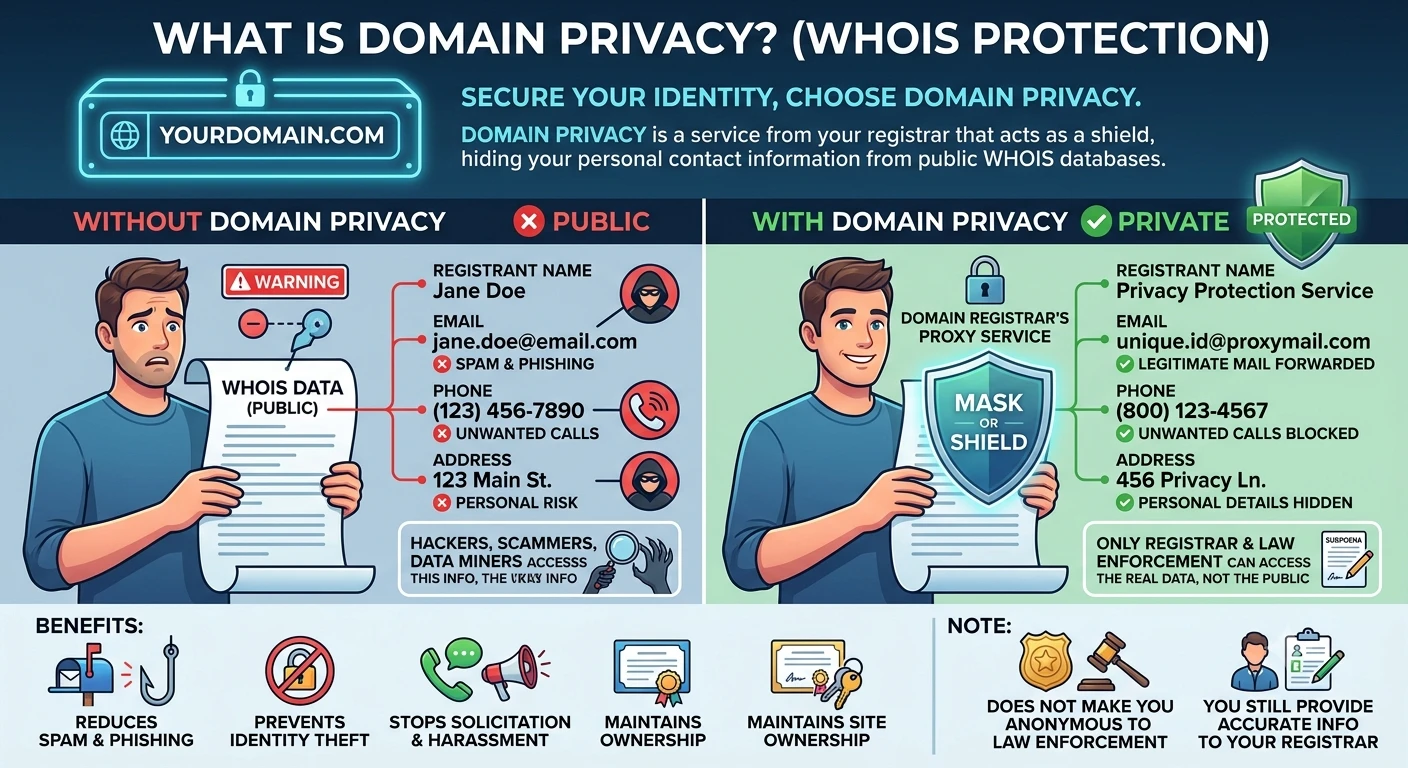
Personal data must be provided to the registrar of a domain name when a domain name is registered. They then place this data, which includes the registrant’s name, telephone number, email address, and physical address, in a public database called the WHOIS database. If you do not take any precautions, anyone on the internet can access this data.
A service known as domain privacy, can protect this personal information from the public. The privacy service provider’s contact details replace the registrant’s details.
With the digital age, online identity protection is more critical than ever. It is a big problem for anybody who has an exposed domain name, even if it’s a business or an individual.
What is Domain Privacy?
If you activate domain privacy protection, the WHOIS record shows the domain registrar’s or third-party privacy registrar’s information instead of the registrant’s actual contact information. Instead of publicly disclosing a registrant’s personal phone number or home address, the domain privacy service publicly discloses its generic contact address.
The privacy service sends the legitimate message to its contact point and then forwards it to the actual domain owner. This process allows communicating without the risk of compromising personal information. The domain privacy service is a proxy service which does not interrupt the regular communication of the real owner, but hides his identity.
What is the Need of Domain Privacy Protection?
Many people consider domain privacy protection an essential service because several reasons support it. Here are a few points that need to be considered:
Protection Against Spam
If you have your email address listed in the WHOIS, then it’s susceptible to being harvested by automated bots. This means there is a high volume of spam and junk advertising emails received by domain owners. Turning on domain privacy greatly reduces this risk.
Prevention of Identity Theft
Names, addresses and phone numbers can be used together by someone who is not trustworthy to commit identity theft. A domain privacy service keeps this sensitive data out of public reach.
Exclusion from Targeted Attacks
Cybercriminals may use WHOIS information to decide on who to target in a phishing attack or social engineering attack. If no one discloses the domain owner, this kind of targeting becomes much more challenging.
Business Confidentiality
Companies with new products or services might prefer that their domain names not be listed when they haven’t officially announced the product or service. Domain privacy protection can keep business plans confidential.
Who Should Use It?
We suggest domain privacy protection for almost every domain user. The risks of personal information being openly accessible on the WHOIS database are very real and substantial, regardless of whether it’s a personal blog, an e-commerce site, or a corporate website.
This service can be especially beneficial for freelancers and independent professionals who register their domains with their own names. During the registration process, you can enter information such as home addresses and phone numbers, and without protection anyone can access it through a basic WHOIS lookup. Small business owners, bloggers, content creators, and even big companies are all good options to consider for private domain registration.
Does Domain Privacy Work with All Domain Extensions?
Most popular domain extensions offer domain privacy protection, such as .com, .net, .org, .info and more. But it is crucial to remember that not every domain name provider offers privacy options.
Rules for certain country-code top-level domains (ccTLDs) mandate that registrants publicly share their information. Some domain extensions for European or government servers, for instance, might have certain limitations on WHOIS privacy.
Before registering, it is advisable to check with the domain registrar to verify if privacy protection is available for a particular domain extension. Many registrars make it obvious to their customers which extensions offer their registrar privacy services.
Frequently Asked Questions (FAQs)
1. Does domain privacy impact SEO or website performance?
No. Domain privacy doesn’t affect search engine optimization or the performance of a site. It stays exactly as it was before, and search engine crawlers don’t care whether you enable or disable WHOIS privacy.
2. Is it possible to register a domain name and then have it be private?
Yes, you can add domain privacy protection to existing domains anytime. Most domain registrars let you change privacy settings through the account control panel. After you enable the privacy service, the WHOIS record will include the information that the privacy service provides.
3. If domain privacy is turned on, can the authorities get to the real owner’s info?
Yes. Domain privacy is a method of concealing personal information from the public, but the company that registers the domain can provide details of the legal owner, or a lawful request for such information, to law enforcement officials or other parties legally. Domain privacy is not a means to be anonymous in the eyes of the law.
4. Difference between domain privacy and SSL?
Domain privacy is different from SSL (Secure Sockets Layer). Domain Privacy” makes the personal information of a domain name registrar private and not visible in the WHOIS database. On the other hand, SSL encrypts the data transmitted between a website and its visitors. Both of them are crucial to the overall security of any website; however they have different functions in terms of web protection.
5. Is domain privacy yearly?
This will be dependent on the registrar. If a provider offers domain privacy as an extra service, you usually renew it every year, and you typically can only buy it for one year at a time. Many registrars offer free privacy protection, which means it stays on even after you register your domain.
Conclusion
To sum up, domain owners should treat domain privacy as a vital service and take it into consideration. This service prevents the WHOIS database from displaying personal information and greatly minimizes the possibility that spammers, phishers, identity thieves, and other online threats will target it. Even if you set up a domain for business or personal use, domain privacy protection offers benefits that outweigh any costs.
Domain registrar privacy services are now commonplace and they are important in the ongoing digital world. We strongly recommend that you enable privacy protection at registration to protect your personal information from the beginning. When domain privacy plays an essential role in getting online, it helps you maintain a safer, more secure online presence.