
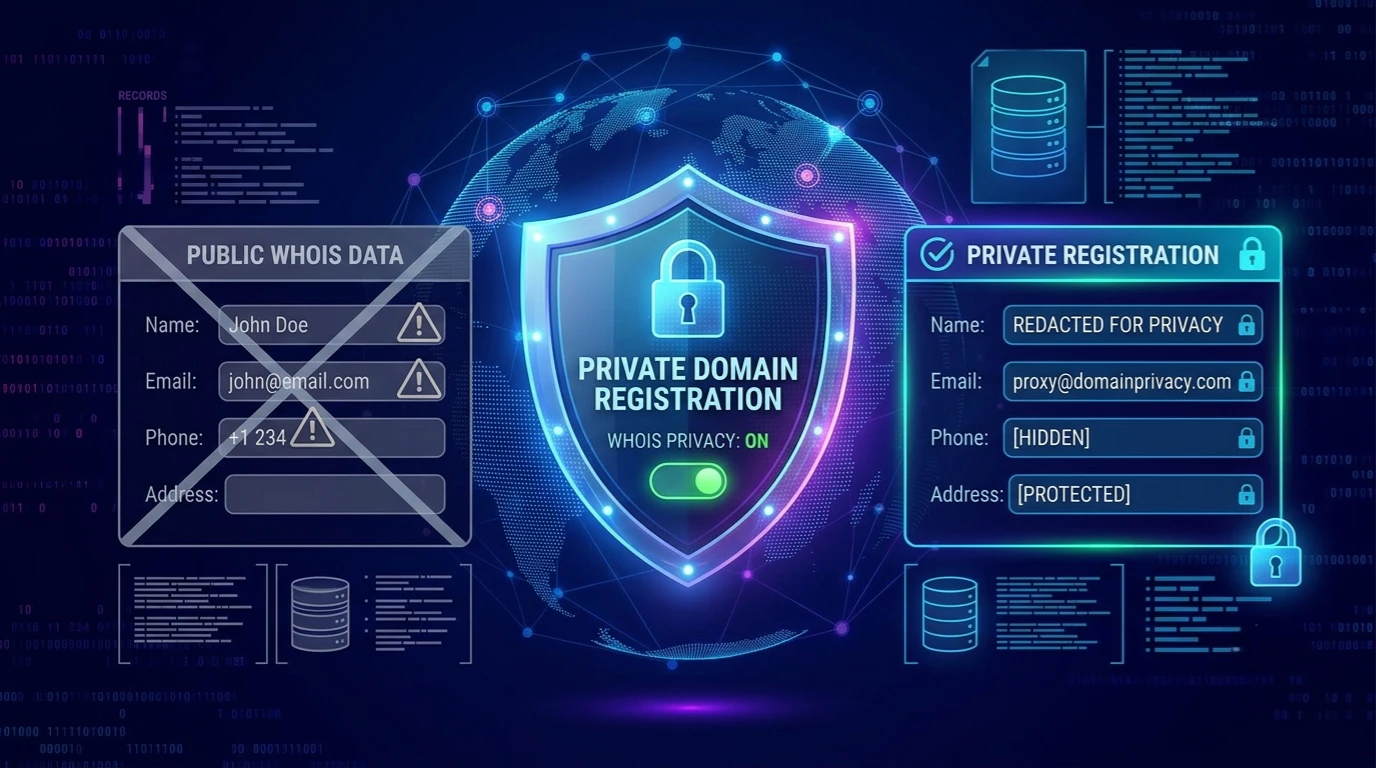
Creating an online presence is a must and must of any web site or online business. A domain name is an address of your website like www.example.com is your digital address. When you register a domain there are a number of legal and administrative steps which are involved, one of the most important of which is that the registration data for domains is made public. This information could be obtained through the database WHOIS to reveal your name, address, phone number and email. However, private domain registration (also known as WHOIS privacy protection) is an optional service that prevents this information from being publicly displayed, keeping your personal data secure.
What is Private Domain Registration?
Private Domain Registration, also called WHOIS privacy or domain privacy, hides the registrant’s personal information in the public WHOIS database.Normally if you register a name for a web site your name, email address, phone number and physical address will be published. By offering the option for you to be registered privately this information is replaced with the registrar’s generic contact information and your real identity is therefore protected.
In simple terms:
Public WHOIS: Displays your actual information.
Private Registration: Make proxy / registrar information visible instead (no one knows the information about you.
WHOIS Database And What Is The Purpose Of Use?
The WHOIS dataBase is a global database of the internet, which stores and displays the ownership information of domains, but its primary use is to ensure that things remain transparent and available for accountability so that anybody can track down a domain owner in the event of misuse or illegal content. public whois displays:
- Registrant’s name
- Address and phone number
- Email address
- Domain Registration, and Domain Expiration Date
- Registrar information
- Nameservers
While transparency is important, it also exposes registrants to spam, identity theft, and unwanted contact, which is why private domain registration became widely popular.
How Private Domain Registration Works?
When you check private registration during the sign up process of your domain at your registrar they replace your actual contact details in the WHOIS database with some sort of proxy or generic details. The public is presented only with these generic information and the authentic communication is channeled to your real email, through the registrar.
Workflow:
- Register a domain based on your personal information.
- Enable Private registration in the Process.
- The registrar put your info into the Who ISP database in proxy of yours.
- Public WHOIS searches return the proxy information only.
- Valid e-mails & legal communications sent to you
Benefits of Private Domain Registration
Privacy Protection
The basic benefit of this is that it makes your personal information not public. This helps in reducing the risks of identity theft and misuse of the data.
Protection Against Spam
One of the best sources of spammers and automated bots are the public whois data. Private registration is convenient if you do not want your contact information to be known so that you can reduce the number of spam emails and unsolicited messages.
Enhanced Security
Cybercriminals will often use the content supplied in the WHOIS layer to hijack a domain or launch a phishing attack. Private registration removes the exposure and enables one more layer of protection.
Protection from Harassment
For bloggers or content creators, Private registration will prevent stalkers or harassers from getting access to your personal information.
Professionalism & Image of the Brand
Protecting your domain will protect your brand as well. Privacy-minded customers can perceive a secured domain to be more trustworthy.
Limitations and Drawbacks
Additional Cost
Private registration is usually accompanied by an annual cost; however, some registrars charge no fee for this as an option of the domain plan.
Not Available for All TLDs
Some country code domains (.in, .us, etc.) will not accept WHOIS privacy.
Reduced Public Trust
Some customers are fond of using public whois info for verifying the authenticity of it. Private registration is suspicious in some rare instances.
Legal Access
While private registration does not have information available to the general public, the information can be accessed by law enforcement and legal authorities if needed.
Who Should Consider Private Domain Registration?
- Personal blogs and hobby websites: Highly recommended when it comes to privacy.
- Small businesses: Combat spam and identity threat.
- Large organizations: Sometimes you need for the public to know so that you can have credibility.
- Non-profit or controversial Web sites: Adds a great layer of security.
How to Enable Private Domain Registration?
- Choose a domain registrar (i.e. Namecheap, GoDaddy, Wix)
- Search and pick your desired domain.
- During the registration process, look for the WHOIS privacy option.
- To activate the privacy protection, you have to make a full payment.
- For other domains that are already registered, login to your account and set / change the privacy.
Most of the registrars have easy toggle functionality and some of them are free privacy depending on the plan
Private vs Public Domain Registration
Private domain registration and public domain registration differ significantly in terms of privacy, security, and cost. In case you register in public your contact information is fully visible and there are chances of identity theft with spam calls and emails. It does however have a high transparency and legitimacy as anyone is able to have the domain owner verified. On the other hand with private registration, your contact information is not displayed which greatly reduces the risk of identity theft and reduces communication that you do not like. While it has medium transparency as compared to public registration; it brings in a cost that is optional. Overall, private registration has become a norm for the security of the modern web, in particular, for people and companies who want to protect their personal information.
Conclusion
Private Domain Registration is a valuable service for anyone registering a domain. It is a good way to maintain privacy of personal information from public WHOIS records, limit spam, better security online and also protect your identity. Despite any small monetary expenses as well as very few limitations, it is a great investment for bloggers, businesses, and anyone that is serious about online privacy. In today’s digital era, where data misuse and cyber threats are increasingly common, private domain registration serves as a strong protective layer that every domain owner should consider.