
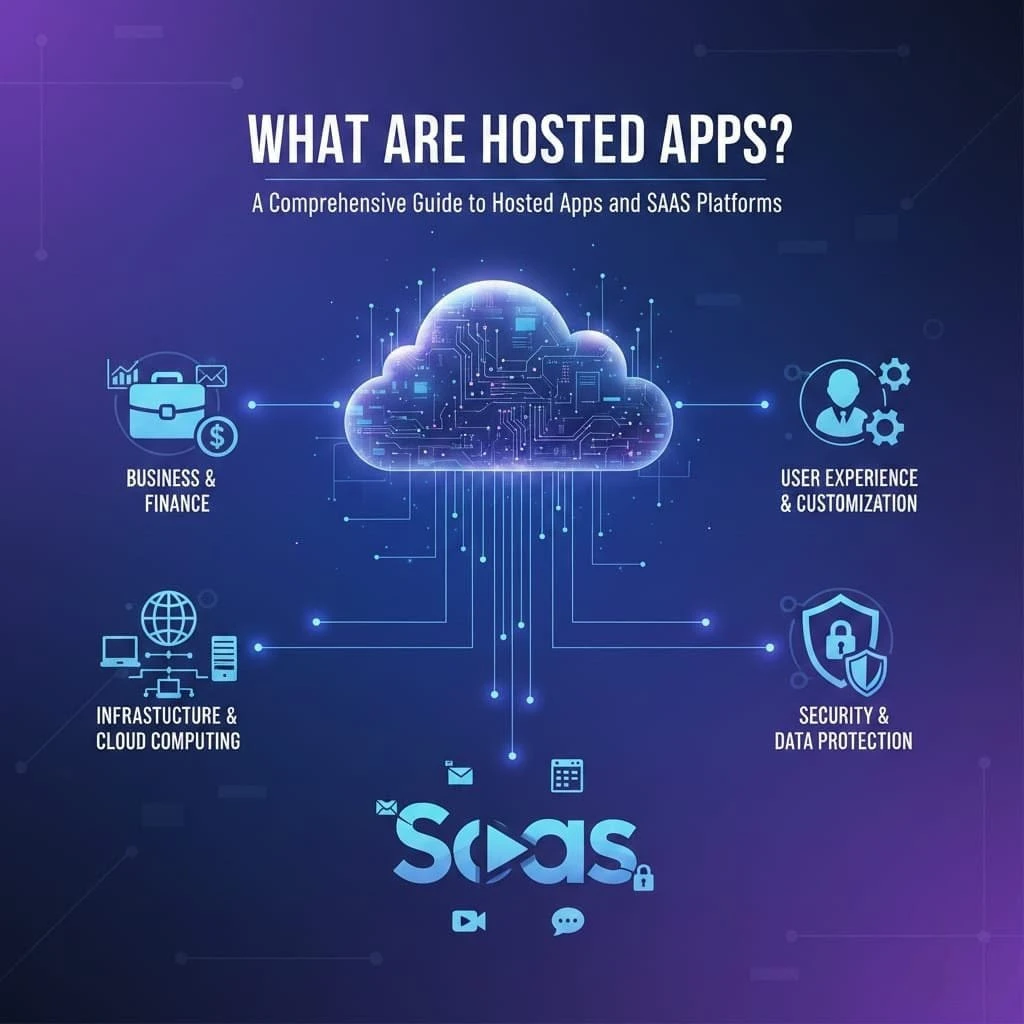

The modern world of digitality is pegged on the Internet based technology. The Internet has replaced the software that people used to buy and install physically.
Hosted apps are the question that arises before the eyes of most novices and business owners. The new kinds of software run on remote infrastructures instead of local machines. The company provides hosted services. Users can pay a monthly subscription instead of buying expensive traditional systems.
A hosted application is a web based application. The only thing the users have to do is to log-in and get to work. It is the strategy that is closely interrelated with cloud computing and software as a service SaaS model.
Customers subscribe to cloud-hosted services instead of maintaining a permanent software license provided by the provider. The hosted applications have thus transformed how an organization is venturing into its day to day activities.
History of Hosted Services Background
Traditional Software Model
Previously, the businesses used to purchase the programs using a single software license in the past decades. They installed applications in internal servers and manual operation of operating systems. All the updates linked to new shopping and technical installation. In this model, it involved the availability of qualified IT personnel and huge investment.
Move Co. to Cloud-hosted Solutions
The emergence of cloud computing generated hosted applications. Companies no longer needed to install sophisticated tools on their businesses. Hosted services included security management, backups and upgrades by the provider.
The customers just had to have access to the internet and started to make monthly payments. This move propelled hosted apps among enterprises and small-scale businesses all over the globe.
How Hosted Apps Function
Centralized Cloud computing infrastructural services.
Cloud computing assists in hosting applications in professional information centers. If a user opens a hosted application, remote computers perform processing. It is only the interface that the customer is interacting with and the provider handles the infrastructure. Hosted services apply the concept of virtualization in order to provide numerous users concurrently in an efficient manner.
Subscription and Licensing Model
Today, most hosted applications consist of business models of SaaS. The users do not purchase a long term software license. The license is instead a part of the hosting services agreement.
Customers have access to it on a monthly payment basis depending on the features or the number of users. The monthly payments help organizations to be flexible and be able to make projections on their budgets. This is among the financial models which would make businesses more comfortable with the hosted applications.
Hosted Applications and Traditional Applications
Installation Requirements
All machines need to install the traditional programs. They depend on the local operating systems. You should not install cloud-hosted apps. Users can use the same hosted applications irrespective of the device.
Updates and Maintenance
They will have to upgrade the old programs manually. A system automatically updates the hosted service. The vendor will deal with security patches, backup and monitoring. The company provides the monthly paying customer with continuous improvement at no extra charges.
Data Safety
Data can be lost in case a local computer collapses. Hosted applications are information stored in secure cloud computing servers. This will assist in mitigating risk and enhancing reliability. Hosted applications are thus more protective as compared to software licenses.
Software as a Service SaaS
SaaS as the Mainstream of Hosted Services
Providing the definition of what are hosted apps is impossible without grasping software as a service SaaS. SaaS is one of the methods through which software is served as an online service. The vendors do not sell boxed products but charge people monthly. Applications on the cloud hosted infrastructure are hosted applications that are practical examples of SaaS.
Categories of SaaS Hosted Applications
Hosted services include email platforms, accounting systems, project management tools, customer relationship dashboard, online storage services and communication platforms. The hosted apps serve as a good example of how cloud computing supports various industries. The license of the software in case of SaaS is valid provided the customer is paying a subscription monthly.
The key Advantages of Hosted Applications
Cost Efficiency
The first benefit of hosting services is that they reduce costs. The companies do not buy hardware and do not maintain operating systems. Using hosted applications lets companies make monthly payments and view expenses like their operational costs. This eliminates the need of huge initial license charges on software and the technology is affordable.
Scalability and Flexibility
The scaling of hosted applications synchronizes with the business requirements. The lowest form of hosted service can enable a start up to enter into a monthly plan and develop it. There is no issue with upgrading it further.
Cloud based infrastructure helps in expansion without re-installation or new licensing. Requirement responsiveness of hosted apps is therefore better.
Stronger Security
Cyber security is a costly affair to professional SaaS providers. The hosted services included encryption, firewalls and backups on a periodic basis via cloud computing servers. Hosted application business are make available enterprise level protection. The software license that comes along with subscriptions comes with automatic monitoring.
E-Commerce Solutions
Many online stores are using hosted applications to make orders, receive payments and inventories. These SaaS hosted are completely on the cloud computing infrastructure.
Conclusion
You can define hosted applications simply as those applications that someone hosts. Cloud-based servers host applications, providing them as hosted services. Most users can use them with the software as a service (SaaS) model.
In this model, users do not need to buy software with a traditional license. Instead, they can pay a monthly fee. Cloud computing creates such platforms by scaling and making them secure and accessible in most parts of the world.