

In today’s digital revolution, the way individuals, as well as businesses, operate is changing many folds at a rapid pace. From software development to enterprise infrastructure, the use of Linux virtual environments has become a mainstay of modern computing. Whether you’re a developer tinkering in the new operating systems or a pro in the IT amplify that enterprise systems to new levels, the ability to create virtual worlds from each type of container to a whole virtual machine has never been so important.
Modern digital environments require systems that have power, flexibility and control. Linux virtual solutions provide all of these benefits, often without the high licensing costs of proprietary solutions. In this article we will explore some of the major benefits of Linux virtual environments, use-cases in real life and how they support users in a variety of industries.
What Is a Linux Virtual Environment?
A Linux virtual environment is any instance of the Linux Operating System running in a host system using Virtualization technology. These instances, usually referred to as Linux VM or Virtual Machine, act like separate computers with virtual hardware, operating systems and file systems.
Unlike physical machines, multiple virtual machines can be realized on one host system. This opens up the way for efficient utilization of resources and enhanced scalability. Thanks to its open source roots, Linux virtualization environments are lightweight, customizable and have wide support throughout the technology ecosystem.
Why Use Linux for Virtualization?
Linux virtualization helps businesses and developers get more out of their resources while enhancing their scalability and performance. Because Linux is open source, virtualization environments based on Linux are lightweight and highly customizable and have a vast number of tools and technologies available to them across the entire IT spectrum.
Cost Effectiveness
Most Linux distributions are of free and open-source. Businesses can run several Linux virtual machines without concerns about paying expensive licensing prices. For businesses that are completing hundreds of VMs, this saves you a good deal of money on your operation costs, maximizing your return on investment.
High Performing and Efficiency
Linux has a good reputation for running well under heavy loads. Many benchmark studies have shown that Linux-based virtual machines offer great networking and server throughput. In demanding environments like data centers and cloud platforms, the consistent and reliable performance is made possible by Linux virtualization.
Flexibility Across Platforms
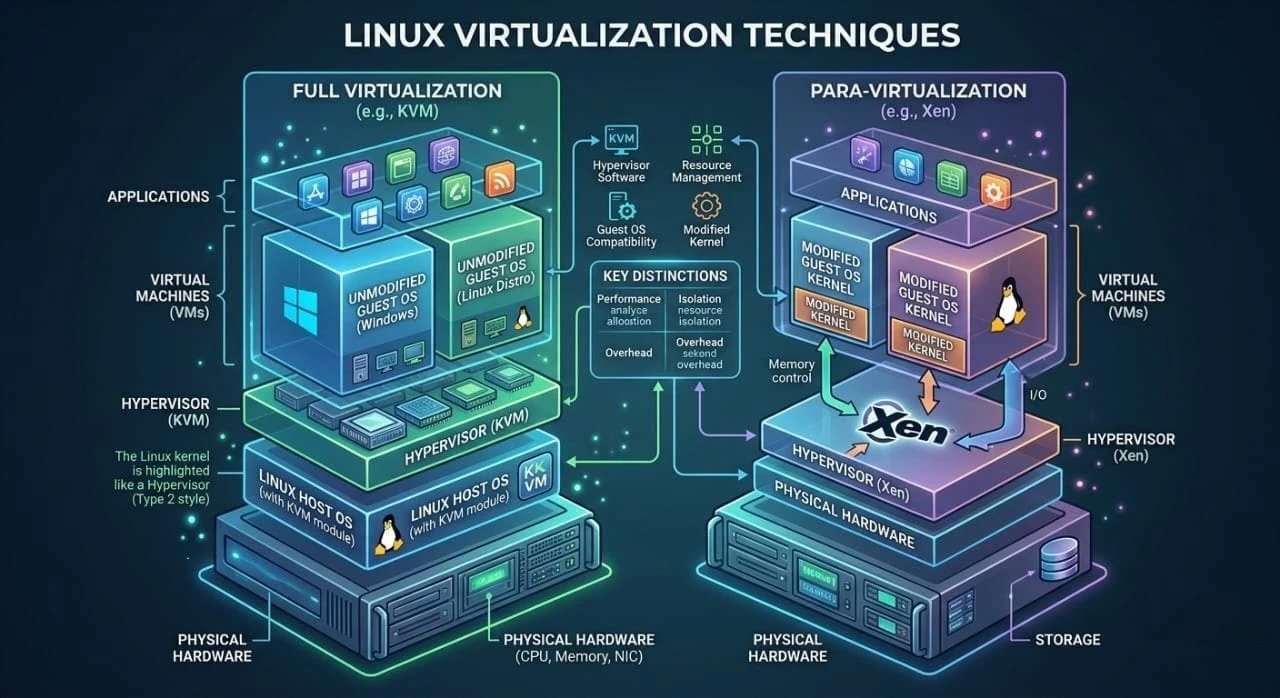
Linux is compatible with cloud-based platforms as well as local servers. Virtualization tools like KVM, Xen and Docker allow administrators to create multiple different types of virtual environments from lightweight containers to full-blown virtual desktops. This flexibility makes Linux suitable for projects on a small scale or at the enterprise level.
Examples of Using Linux Virtual Machines
Linux virtual environments tend to be very popular in different areas due to their versatility and efficiency.
Software Development and Testing
Developers use Linux VMs to test applications in different operating systems and configurations. Instead of maintaining multiple physical machines they can easily create virtual machines and manage them by simple commands. This makes the development process faster and reduces the cost of hardware.
Education and Training
Educational establishments use Linux virtual environments for the training of operating systems, networks, and cyber security. Students can practice in virtual labs without having to use dedicated hardware, which makes learning more accessible and scalable.
Server Consolidation
Organizations use Linux virtualization to achieve multi server on one physical machine. This reduces hardware costs and saves energy and improves utilization of resources. Data centers can run dozens of virtual machines on powerful servers and never suffer performance issues.
How to do Linux Virtualization Works
Virtualization is the process of separating software and physical hardware with the help of a hypervisor. A hypervisor is an intermediary between the host machine and the virtual machines and shares resources like CPU, RAM and storage.
There are two major types of hypervisor:
Type 1 (Bare Metal)
Runs directly on hardware and is very high performing. Examples include KVM and Xen.
Type 2 (Hosted)
Runs on top of an already existing operating system. Some examples are VirtualBox and VMware Workstation.
Linux supports both types, and allow the user to choose on the basis of user performance and management needs
Getting Started with a First Linux Virtual Machine
Starting with Linux virtualization is easy and easy for beginners.
- Download a Linux ISO: Select a distribution like Ubuntu, Fedora or CentOS and download the ISO image.
- Choose a Virtualization Tool: Beginners may use VirtualBox and advanced users can use KVM for better performance and control.
- Create and Configure VM: Allocate CPU, RAM & storage resources. Attach the ISO file in the boot disk.
- Install Linux: Boot the VM and follow the installation process just as installing in a physical computer.
- Update System: After installation, use command line tools to update your system to make sure everything is secure and stable.
Technologies That Help Improve Linux Virtualization
Linux virtualization is supported by powerful technologies for efficiency and automation.
Containers and Docker
Containers bundle applications with their dependencies, making it faster and more consistent to deploy them.
Orchestration Tools
Kubernetes and OpenShift automate the process of virtual environment deployment, scaling and management.
Security Benefits of Linux Virtual Machines
Security is a big issue in virtualized environments and Linux has good security features.
- Isolation ensures that every virtual machine will operate independently.
- For advanced access control, the SELinux and AppArmor are used.
These features make virtualization in Linux ideal for industries such as finance, healthcare and government where data protection is critical.
Conclusion
Linux virtual environments have become a required part of modern computing. They provide unbeatable flexibility, cost savings, performance and security to developers, businesses and institutions. From cloud computing to software development to enterprise infrastructure, Linux virtualization continues to drive the digital world.
As technology continues to evolve, using Linux virtual solutions will help individuals and organizations stay competitive, scalable, and future-ready in the ever-changing digital landscape.